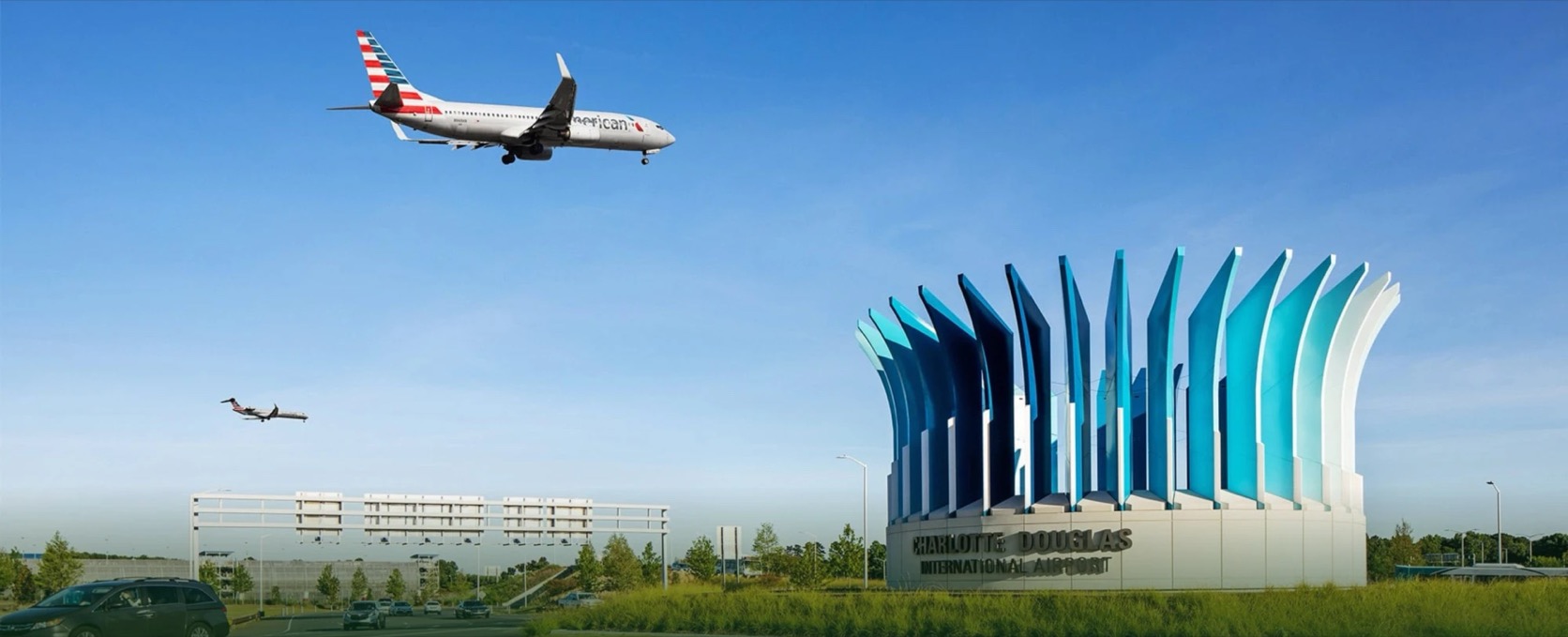
 Pictured: Charlotte Douglas International Airport
Market Insights · Infrastructure & Economic Development
Charlotte Douglas is building for growth
Charlotte, NC · I-85 / I-77 Corridor · 2 Min Read
A proposed $2.1 billion capital program and a fourth runway opening in 2027 add capacity at one of the country’s busiest hubs, and the demand reaches the industrial corridors along I-85 and I-77.
Charlotte Douglas International Airport (CLT) is advancing a capital program for new gates, concourse expansions and airfield upgrades. More capacity strengthens Charlotte as a Southeast logistics hub and supports demand along I-85 and I-77, where flex industrial space remains tight.
A $2.1 billion next phase
In October, airport officials presented City Council with a proposed $2.1 billion capital program, called CLT Beyond, tied to a new lease agreement with American, Delta, Frontier, Southwest and United. That is roughly four times the capital program in the previous agreement.
Projects under discussion include an expanded Concourse C, a passenger tunnel linking it to the main terminal, renovated international arrivals facilities, planning for more international gates, and airfield and electrical upgrades. The program builds on Destination CLT, about $4 billion of terminal, concourse and airfield work over the past decade.
A fourth runway in 2027
The largest airfield project is already under construction. CLT’s fourth parallel runway, 10,000 feet long and about $1 billion, is scheduled for commissioning in fall 2027. The airport projects it will add 20 peak-hour arrivals and departures in 2028, rising to 32 by 2033.
Airport capacity is a regional asset. The demand it creates lands well beyond the terminal.
The airport’s reach
A study by NC State University’s Institute for Transportation Research and Education put CLT’s 2023 economic output at $40 billion across the Carolinas, supporting about 184,400 jobs: 167,045 in North Carolina and 17,330 in South Carolina. The airport served 53.6 million passengers in 2025 and is American Airlines’ second-largest hub.
What it means for owners
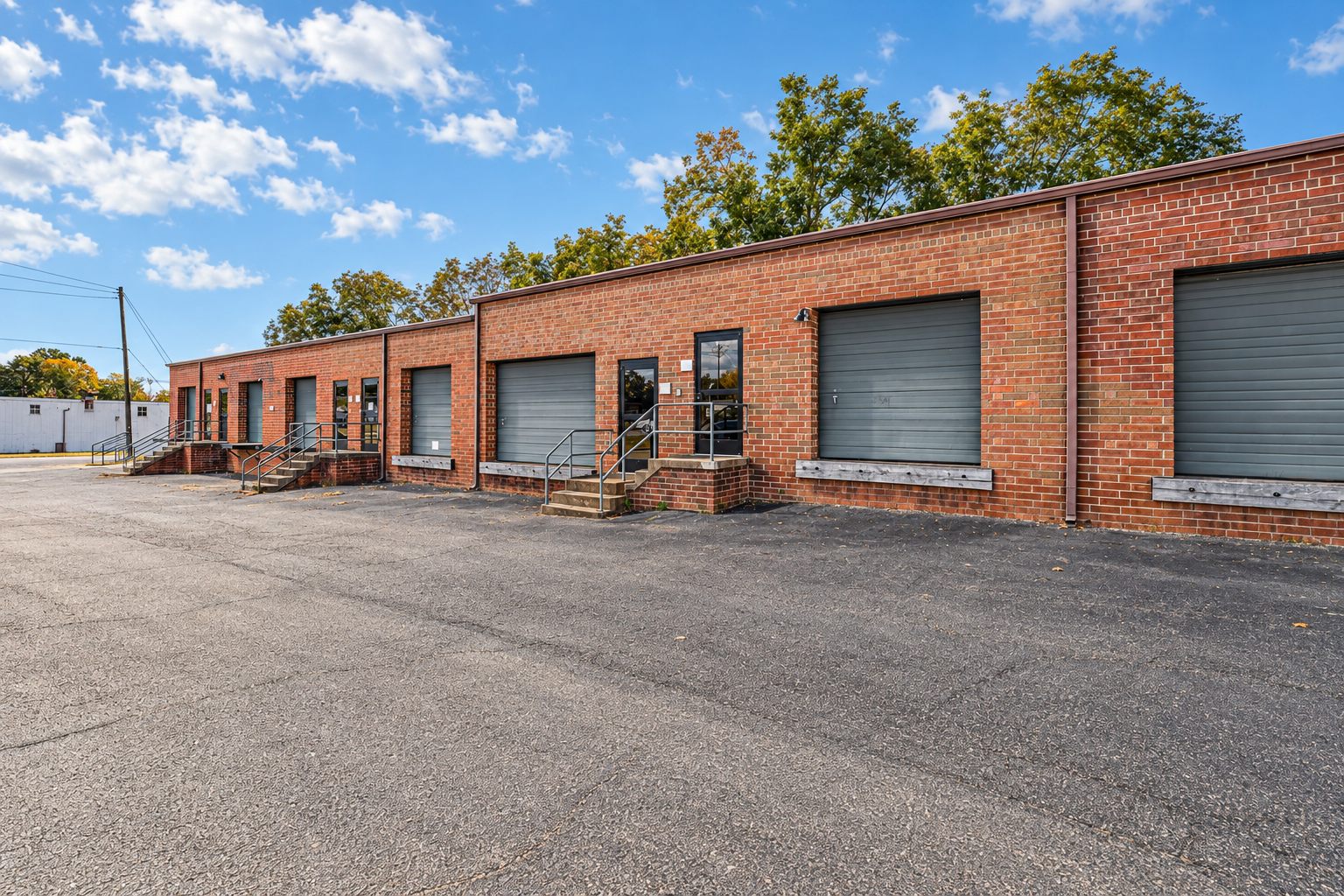
Airports concentrate time-sensitive business: air cargo, aviation maintenance, parts distribution, and the contractors and service companies that support them. Those businesses want flex and small-bay space a short drive from the airfield and the interstates, which around CLT means the I-85 and I-77 corridors. That product is expensive to build, so new supply does not arrive quickly when demand rises.
For owners and investors, the point is horizon. A runway opening in 2027 and a capital program sized for the next decade are long-term commitments to capacity, and the industrial space closest to that capacity is where the demand shows up first.
Sources: Charlotte Douglas International Airport; NC State University Institute for Transportation Research and Education; Axios Charlotte; Aviation Pros; ENR. Photo: Land Design.